Total War: MEDIEVAL II
Feral InteractiveStrategy
4.7832.00 Reviews
- Version
- Varies With Device
- Installs
- 100.00K
- Age Rating
- Teen
Screenshots
Our Review of Total War: MEDIEVAL II
 Analysis by Appyee
Before settling into a campaign, I’d ask myself a practical question: do I want a strategy game that rewards attention over many sessions, or something I can play in quick bursts without remembering what I was doing? Total War: MEDIEVAL II is firmly in the first camp. Its appeal comes from switching between the broad decisions of ruling a faction and the immediate pressure of commanding troops, so the best moments often arrive after you have learned how those layers affect each other.
The first week: learning to think in two layers
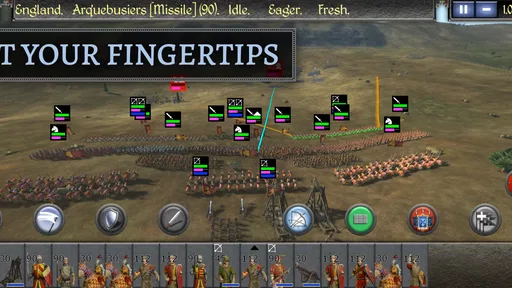
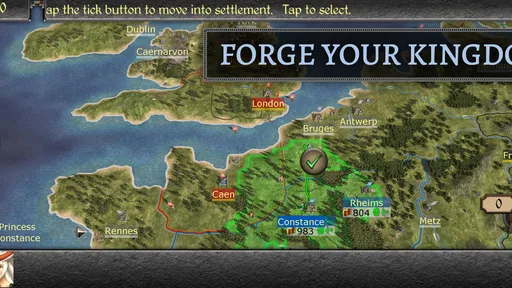
My first few sessions would be spent getting comfortable with the game’s change of pace. On the campaign map, choices about cities, diplomacy, and armies shape what can happen later. Battles then ask for a different kind of attention: formations, terrain, and timing matter more than simply sending every unit forward. That contrast is the main reason this feels richer than a strategy game built around only a map or only combat.
The early learning curve is approachable, but “approachable” does not mean every decision is obvious. A new player can follow the tutorials and still need time to understand why a campaign is going well or badly. I’d resist the temptation to treat every turn as a checklist to clear. Instead, pick a manageable goal, such as securing a nearby area or strengthening a vulnerable position, and use the consequences to learn how the wider campaign responds.
That approach also helps with the mobile format. A battle can hold my attention for a focused stretch, while the campaign layer is easier to revisit in shorter windows—provided I leave myself a note about the next priority. If I stop mid-campaign without a clear objective, it is easy to return and spend time re-reading the situation rather than making a meaningful choice. A simple habit of ending a session by identifying the next move makes the game easier to pick up again.
Feral Interactive is the developer, and the game is a paid strategy title rather than a free download that asks for attention through a stream of small purchases. It costs $13.49, carries a Teen age rating, and has optional in-app purchases priced at $6.49 per item. I’d consider that entry price before installing: this is most appealing when I expect to play enough campaigns to appreciate its slower, layered style, not when I’m only curious about a few battles.
How the campaign earns its place over time
When you first fire up Total War: MEDIEVAL II, you're immediately thrown into the bustling, chaotic world of medieval Europe. The game is a perfect blend of real-time battles and turn-based strategy, giving you the best of both worlds. Whether you're commanding armies in epic battles or making diplomatic decisions on a map, the game keeps you on your toes.
The interface is pretty user-friendly, even if you’re new to the Total War franchise. The tutorials are helpful, walking you through the basics without overloading you with information. Trust me, you’ll want to pay attention, especially when it comes to managing your resources and territories.
The Gameplay: Where Strategy Meets Action
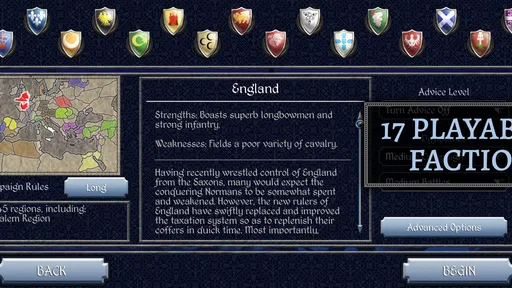
Now, the gameplay is where Total War: MEDIEVAL II shines. You start by choosing a faction—each with its own unique units and strategies. From there, it’s all about expanding your empire, managing your resources, and, of course, winning battles.
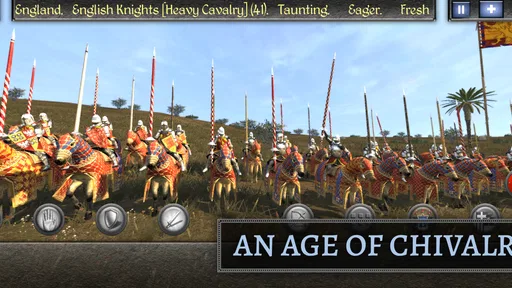
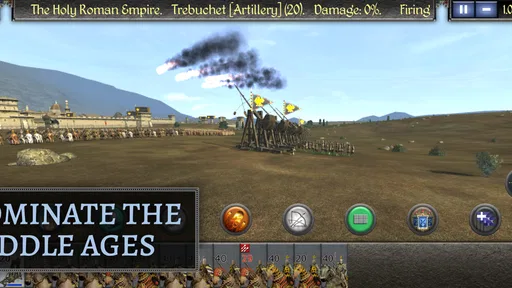
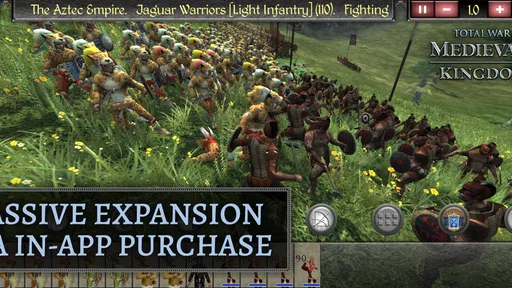
The battles themselves are epic. Picture this: thousands of soldiers clashing on the battlefield, each unit with its own strengths and weaknesses. Your job? To outsmart the enemy commander and secure victory. It’s intense, but in the best way possible. You’ll find yourself getting sucked into the tactical decisions of where to position your cavalry or when to unleash your archers.
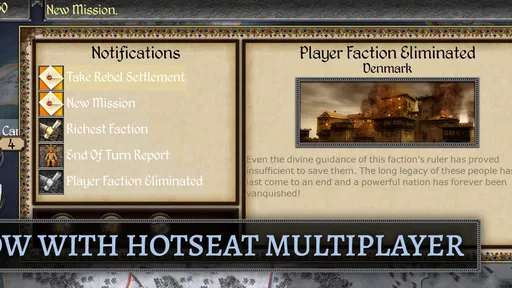
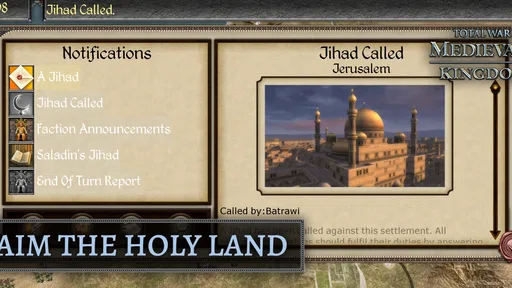
Off the battlefield, the game switches gears to a more strategic view. You’ll be managing your cities, handling diplomacy with other factions, and making sure your empire is thriving. It’s a delicate balance, and every decision can have a ripple effect on your campaign.
Building a routine without turning every session into a chore
For month-to-month value, the strongest reason to return is that a campaign can give you a new problem to solve after each major success. Winning a battle does not automatically make the wider situation safe; you still have to think about how your territory and relationships are developing. I find that more sustaining than a strategy game where each match resets the stakes, though it also means the game asks for patience and a willingness to plan beyond the immediate fight.
A useful habit is to decide what kind of session you have time for before opening the game. If I only have a short break, I would focus on reviewing the campaign and choosing a clear next step rather than starting a battle I may need to rush. With a longer stretch, I can give a major fight the attention it deserves. This is not a strict schedule imposed by the game; it is a way to avoid letting a thoughtful strategy title become a source of hurried, half-finished decisions.
Another good discipline is to avoid expanding simply because a victory makes it possible. More territory can mean more to manage, and a campaign that grows faster than your ability to keep track of it may become harder to enjoy. I’d pause after a successful push, assess which places are secure and which are exposed, and then choose whether to consolidate or continue. That small change in mindset makes the strategic layer feel less like a race to occupy the map and more like a series of deliberate trade-offs.
For a realistic everyday scenario, imagine opening the game after work with enough time for one focused session. I would check the state of the campaign, pick one pressing issue—perhaps a border that needs attention or a battle that can resolve a threat—and leave broader expansion for another day. The value is not that every session produces a dramatic conquest; it is that even a modest decision can make the next return feel purposeful. If that kind of slow progress sounds satisfying, the campaign structure is a real strength.
What the mobile version asks of you
Touch controls and a detailed strategy game are a trade-off worth considering before paying. A campaign map involves examining several kinds of information, while battles reward careful placement and timing. On a phone, that can feel more involved than a game designed around short taps and quick rounds. I would choose a screen size and a playing position that let me see the battlefield comfortably, and I would not expect the most demanding encounters to be ideal for distracted, one-handed play.
The practical question is whether I can follow what is happening without rushing. If small interface elements or dense information make it difficult for you to judge the campaign, the game’s depth may become friction rather than a benefit. A tablet may suit someone who wants more room to inspect the action, while a phone is more convenient for carrying a campaign around. Either way, I’d give myself a calm first session to learn the controls instead of judging the game during a rushed commute.
It is also worth distinguishing between the game’s scale and the amount of time a single person must spend in one sitting. A large battle can look like a commitment, but the appeal is in making considered decisions, not simply staying online for a long stretch. The campaign can be approached in separate visits, though remembering your priorities matters. If you strongly prefer games that save your attention as well as your progress—where every return is immediately obvious—this may require more mental bookkeeping than you want.
Graphics and Sound: A Feast for the Senses
Visually, the game holds up well, even years after its original release. The attention to detail in the unit designs and landscapes is impressive. From the snowy mountains to the lush forests, the environments are immersive. And the sound design? It’s on point. The clash of swords and the thundering of horses really pull you into the medieval vibe.
The music deserves a shout-out too. The soundtrack enhances the atmosphere, making you feel like you're right there in the thick of it. It’s the little things like this that make the gaming experience so much richer.
Where it differs from lighter strategy games
Compared with casual strategy games built around short rounds, simple upgrades, or a rapid stream of rewards, this is a much more involved proposition. Its satisfaction comes from connecting decisions across the campaign and then seeing armies meet on the battlefield. That makes it a better fit for players who enjoy planning and adapting than for someone who wants a quick tactical puzzle with a clean ending after a few minutes.
It also differs from a battle-only strategy game. If you mainly want to test formations and tactics without caring about diplomacy or the condition of a wider empire, the campaign layer may feel like overhead. Conversely, someone who enjoys managing a map but dislikes direct battles may find the combat side pulls attention away from the quieter decisions. The distinctive draw is the combination; it is also the main reason the game will not suit every strategy fan.
That distinction helps answer whether it can replace other games in the genre. I would treat it as a substantial campaign game to return to, not as a universal substitute for quick mobile diversions. The rating is a 4.7 average from around 11,000 ratings, with roughly 790 written reviews, and the game has passed 100,000 installs. Those figures suggest it has found an audience, but they do not change the personal fit question: its slower rhythm is either the point or the obstacle.
Friction, fatigue, and when I would stop
The same systems that create long-term interest can also create fatigue. A campaign may ask me to keep track of several concerns at once, and success can bring fresh responsibilities rather than a clean finish. If I start playing out of habit while no longer enjoying the decisions, I would take a break instead of pushing through turns just to see the map grow. The game is strongest when I’m curious about the consequences of my choices, not when I’m treating progress as a daily obligation.
There is also a difference between enjoying strategy in theory and enjoying the time it takes to make strategic choices. Players who want immediate action may find the movement between campaign management and battles interrupts the pace they prefer. Those who dislike learning an interface or planning around a screen’s limits may face extra friction on mobile. I would skip it if I wanted a free, low-commitment game for brief sessions, or if I was not prepared to pay for a title whose main value unfolds gradually.
For someone unsure whether the commitment is right, I’d make the decision based on the loop rather than the medieval setting alone. Ask whether managing a faction sounds as appealing as commanding troops, and whether you enjoy pausing to think before acting. If the answer is yes to both, the price may feel reasonable over repeated campaigns. If only the battles sound attractive, a more combat-focused alternative is likely a better match.
Final Thoughts: A Timeless Classic
In the end, Total War: MEDIEVAL II is a game that stands the test of time. It’s challenging yet rewarding, offering countless hours of gameplay. Whether you’re a history buff or a strategy game enthusiast, this game has something for everyone.
The combination of deep strategy, intense battles, and historical context makes this a standout title in the Total War series. So, if you haven’t already, give it a go. Just be prepared to lose track of time—this game has a way of pulling you in and not letting go.
Ready to conquer medieval Europe? Download Total War: MEDIEVAL II and start your campaign today. Good luck, commander!
My long-term verdict
For lasting value, I’d judge this game by whether I still enjoy weighing choices after the novelty of its setting wears off. The central appeal is not merely seeing medieval armies clash; it is linking that spectacle to the slower work of guiding a faction. When I want a campaign that rewards patience and gives battles context, that combination has a clear reason to stay installed. When I want quick entertainment with almost no mental warm-up, it is the wrong tool.
My recommendation is strongest for strategy fans who enjoy both broad planning and tactical combat, and who are comfortable paying upfront for an experience that rewards returning over time. I’d be more cautious if you are new to the genre and only want something effortless, or if your gaming time is usually too fragmented to remember a campaign’s situation. The lasting test is whether you enjoy the decisions between battles as much as the battles themselves. If you do, this is a substantial strategy game to keep coming back to; if not, its depth can feel like work rather than a reason to stay.
Verdict
Strengths of Total War: MEDIEVAL II
- Stunning graphics with detailed medieval visuals.
- Extensive campaign offering hours of gameplay.
- Diverse factions each with unique strengths.
- Deep strategic depth with diplomacy and battles.
- Smooth transition from PC to mobile controls.
Limitations of Total War: MEDIEVAL II
- Large download size requires ample storage.
- Complex mechanics may overwhelm newcomers.
- Occasional lag on older devices.
- Limited tutorial for new players.
- Price might be high for casual gamers.
Other Releases by Feral Interactive
View All
Hitman: Blood Money — Reprisal
Action4.3

GRID™ Autosport
Racing4.6

XCOM 2 Collection
Strategy4.2

Total War: EMPIRE
Strategy4.3
Similar Picks in This Category
View All
Clash of Clans
Supercell4.5

Plants vs. Zombies™
ELECTRONIC ARTS3.7

Lords Mobile: Kingdom Wars
IGG.COM4.5

Clash Royale
Supercell4.4

State.io — Conquer the World
CASUAL AZUR GAMES4.1

Car Driving School : Car Games
Spark Game Studios3.9
Frequently Asked Questions
What type of game is Total War: MEDIEVAL II?
Total War: MEDIEVAL II is a strategy game that combines turn-based strategic planning with real-time tactical battles. Players manage kingdoms, engage in diplomacy, and command armies during the medieval period. This game is known for its depth and complexity, offering a rich historical experience.
Is Total War: MEDIEVAL II available on both Android and iOS devices?
Yes, Total War: MEDIEVAL II is available for both Android and iOS platforms. The mobile version has been optimized for touchscreen controls, ensuring a smooth gaming experience on smartphones and tablets, while retaining the extensive features from the original PC version.
What are the system requirements for Total War: MEDIEVAL II?
To run Total War: MEDIEVAL II smoothly on mobile devices, you will need a relatively modern smartphone or tablet. It requires iOS 11 or later on iOS devices, and Android 9.0 or later for Android devices. Adequate storage space is also necessary due to the game's large size.
Does Total War: MEDIEVAL II offer multiplayer options?
Currently, the mobile version of Total War: MEDIEVAL II does not support multiplayer gameplay. The focus is solely on the single-player campaign, where players can enjoy the comprehensive strategic and tactical elements without needing an internet connection.
Are there any in-app purchases in Total War: MEDIEVAL II?
Total War: MEDIEVAL II on mobile does not include in-app purchases. When you purchase the game, you get the complete experience without any additional costs. This purchase model appeals to players who prefer a one-time payment rather than dealing with microtransactions.
Play our best games!


